GLPro Official Website › Blog › Supports Appetite Control
What “Supports Appetite Control” Can And Cannot Mean On A Label
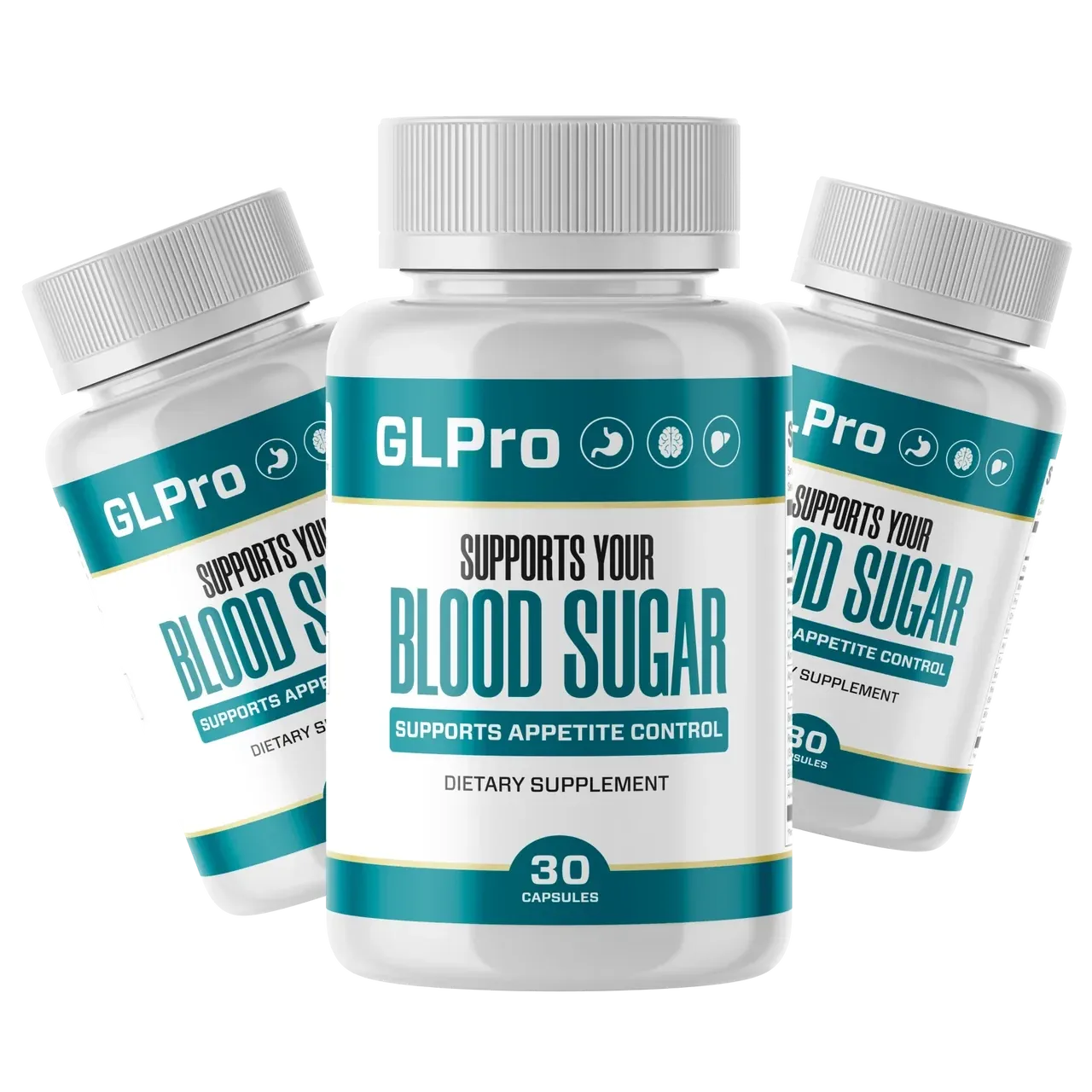
Supports Appetite Control is the second line on the GLPro bottle. What that kind of claim is allowed to say, how appetite is measured in research, and how to judge it without fooling yourself.
- It is a structure and function claim: a statement about the body’s normal workings, not a promise to treat anything.
- The FDA does not approve these claims before sale. The company is responsible for backing them up.
- Appetite is measured in research with rating scales and weighed test meals, and it is hard to measure well.
- It is not a weight claim. The sales page’s weight wording is not on the bottle, and this website does not repeat it.
General information, not medical advice. GLPro is a dietary supplement for healthy adults aged 18 and over. It is not a drug, not a GLP-1 medication and not FDA-approved, and it is not a treatment for diabetes, prediabetes or any other condition. Blood sugar is a medical matter: if you have a diagnosis or take any prescribed medicine, talk to your clinician or pharmacist before adding anything, and never change a prescribed dose on your own. Low blood sugar is urgent. Shakiness, sweating, confusion or a racing heart in someone who takes diabetes medicine needs treating at once, and if the person cannot swallow or does not improve, call 911.
The words on the bottle, and the words around it
The second claim on the main GLPro bottle is Supports Appetite Control. Other wording sits around it, and it is not all the same kind of statement.
| Where | What it says about appetite or weight | What kind of statement it is |
|---|---|---|
| Main bottle | Supports Appetite Control | A structure and function claim, and one of the two this website works inside |
| Second label version | No appetite line; it prints Natural GLP-1 Booster instead | The seller’s wording, quoted and not repeated |
| Seller’s listing panels | Supports appetite control, beside energy through the day and mental clarity | Artwork; only the appetite and blood sugar lines are also on the bottle |
| Sales page | Natural weight loss, and a proven fat-burning metabolism | Advertising copy. Not on the label, not sourced, not repeated here |
Only the first row is a claim this website makes. The others matter because a buyer meets all four together.
What a structure and function claim is
Dietary supplements may carry claims about how a product affects the normal structure or function of the body. The FDA’s page on structure/function claims sets out the rules: the claim must not say the product diagnoses, treats, cures or prevents a disease; the manufacturer is responsible for making sure it is accurate and truthful; the FDA must be notified; and the label must carry the disclaimer that the statement has not been evaluated by the FDA.
The FDA’s questions and answers on supplements add the part most buyers miss: the agency does not approve supplements for safety or effectiveness before they go on sale. Responsibility sits with the company, and the FDA acts afterwards if it finds a problem.
What Supports Appetite Control can mean
- A statement about the body’s normal regulation of hunger and fullness.
- Something the company says it can substantiate, though it has not published how.
What it cannot mean
- That the product treats obesity, or any other condition.
- That the FDA has checked or approved the claim.
- That any particular amount of change in hunger has been measured.
How appetite is measured in research
Appetite sounds simple and is not. Blundell and colleagues’ 2010 review of appetite methods, written for evaluating foods, is a good map of how researchers approach it.
Satiation and satiety
Satiation is the process that brings a meal to an end, so it shows up in how much someone eats at a sitting. Satiety is the suppression of hunger after the meal, so it shows up in how long before the next one and how much is eaten then. A product could in principle affect one and not the other.
Rating scales
The standard tool is a visual analogue scale: a line anchored at one end by not hungry at all and at the other by as hungry as I have ever felt, on which people mark how they feel at set times. Brunger and colleagues tested a tablet version against the traditional paper one and found it gave comparable ratings, which matters because a scale is only useful if it is consistent.
Test meals
Ratings are subjective, so studies usually add a measured meal: people eat as much as they like from a set menu, and researchers weigh what is left. Intake is harder to fool than a rating, and a good study pairs both with a placebo or comparison food and blinding.
Why appetite claims are hard to test
Set those methods beside a daily capsule and the difficulty is plain.
- Expectation is powerful. Someone who has just paid for an appetite product is primed to feel less hungry, and without a placebo group that effect looks exactly like a real one.
- Hunger moves on its own. Sleep, stress, alcohol, the size of yesterday’s dinner and the time of the last meal all shift it from day to day.
- Ratings and eating can disagree. Feeling fuller does not always mean eating less, which is why studies measure both.
- Short studies miss adaptation. An effect on day one may have faded by week four.
- Appetite is not body weight. A change in how hungry someone feels is a separate question from a change in weight, which depends on much more.
None of this makes an appetite claim false. It means a buyer learns little from the claim alone. For GLPro, neither a study of the capsule nor a formula is published, so there is no study of any kind to point to. The mechanism page sets out what can be said about how GLPro is meant to work.
GLPro and its two printed claims
Supports your blood sugar and supports appetite control: that is what the bottle says, and all this website repeats. One capsule a day, 30 to a bottle, 60 days to change your mind.
$49 to $79 a bottle · 60-day money-back guarantee
Order GLPro
A fibre that fills you up, and what the trials found
A useful example of an appetite story outrunning the evidence is glucomannan, a soluble fibre from the konjac plant. It absorbs water and swells, which is a plausible route to feeling full, and it has been sold for weight control for decades.
Onakpoya and colleagues’ 2014 meta-analysis pooled randomised trials of glucomannan in people with overweight or obesity and found no statistically significant weight loss compared with placebo. A believable mechanism for fullness is not a measured effect.
GLPro does not say whether it contains glucomannan or any other fibre. It publishes no ingredient list, so no mechanism can be attached to its appetite claim at all. Our ingredients article covers soluble fibre and blood sugar.
Weight-loss advertising is a different thing
Supplement labels fall to the FDA. Advertising, sales pages included, falls largely to the FTC, and the FTC’s health products compliance guidance says health claims need competent and reliable scientific evidence, and that what counts is the overall impression an ad creates, including what it implies.
GLPro’s sales page goes much further than its bottle. It calls GLPro “The #1 Blood Sugar Formula”, mentions “Natural Weight Loss”, and says the formula is “proven to assist in maintaining a healthy fat-burning metabolism”. None of those phrases is on the label, none is sourced, and none appears on this website as a claim. They are quoted here so the gap is visible.
The FTC’s consumer page on weight-loss ads lists promises that are always a warning sign. Several turn up near appetite products:
- lose weight without changing what you eat or how much you move;
- lose weight permanently;
- it works for everyone;
- a dramatic loss in a short, specific time.
Supports Appetite Control makes none of those promises. The risk is that a buyer reads it through the sales page and hears something bigger. GLPro is not a weight-loss product, and the benefits page says so in its own section.
How to judge the claim for yourself
A little structure turns an impression into something you can compare. This borrows from the research above, scaled down to a kitchen table.
- If you can, take a baseline week before the first capsule. Rate hunger before your main meal from 0 to 10, and note any snacking between meals.
- Keep the routine steady. Same meals, same times, as far as life allows, and one change at a time.
- Keep rating once you start. Same time, same scale, one line a day.
- Wait before you judge. Reviewers on this desk most often describe 3–4 weeks.
- Compare averages, not days. Put the baseline week beside weeks four and five.
- Decide by day 50, inside the 60-day guarantee.
This is not a trial: there is no placebo, so expectation will play its part. It is still far better than memory. Our 60-day timeline article sets out the whole plan, and the guarantee page explains a return.
What the claim does not mean
To close the loop, here is what the line on the bottle does not say, however it is read.
- It does not say GLPro reduces weight. That wording belongs to the sales page, not the label.
- It does not say GLPro works like a GLP-1 medicine. It is not one.
- It does not promise a degree of change, a timeline, or a result for everyone.
- It does not say what in the capsule is responsible, because the formula is not published.
- It does not replace a clinician’s advice about appetite, eating or weight.
The unflattering part: this desk cannot tell you how strong the claim is, because the evidence behind it is not published. The reviews page shows how reviewers on this desk’s record described their first weeks, and the pricing page sets out the three packs.
The verdict
Supports Appetite Control is a structure and function claim. It describes the body’s normal regulation of hunger, it was not reviewed by the FDA before sale, and the evidence behind it has not been published. It is not a weight claim, whatever the sales page implies, and it is not a drug claim.
Appetite is hard to measure even in a laboratory, so the honest way to judge the claim is a simple home record over a few weeks, inside the refund window. The ingredients page explains the one thing no home record can tell you, which is what the capsule contains.
Sources cited in this article
- U.S. Food and Drug Administration. Structure/Function Claims. https://www.fda.gov/food/nutrition-food-labeling-and-critical-foods/structurefunction-claims
- U.S. Food and Drug Administration. Questions and Answers on Dietary Supplements. https://www.fda.gov/food/information-consumers-using-dietary-supplements/questions-and-answers-dietary-supplements
- Blundell J, de Graaf C, Hulshof T, et al. Appetite control: methodological aspects of the evaluation of foods. Obes Rev. 2010;11(3):251-70. https://pubmed.ncbi.nlm.nih.gov/20122136/
- Brunger L, Smith A, Re R, et al. Validation of an iPad visual analogue rating system for assessing appetite and satiety. Appetite. 2015;84:259-63. https://pubmed.ncbi.nlm.nih.gov/25450987/
- Onakpoya I, Posadzki P, Ernst E. The efficacy of glucomannan supplementation in overweight and obesity: a systematic review and meta-analysis of randomized clinical trials. J Am Coll Nutr. 2014;33(1):70-8. https://pubmed.ncbi.nlm.nih.gov/24533610/
- Federal Trade Commission. Health Products Compliance Guidance. https://www.ftc.gov/business-guidance/resources/health-products-compliance-guidance
- Federal Trade Commission, Consumer Advice. The Truth Behind Weight Loss Ads. https://consumer.ftc.gov/articles/truth-behind-weight-loss-ads